Arrell Food Summit 2025
The Arrell Food Institute (AFI) at the University of Guelph hosted the 8th Annual Arrell Food Summit on October 21st, 2025, under the theme “Resilience Reimagined: Redesigning Food Systems for a Changed World.” The day featured essential conversations with policymakers, entrepreneurs, farmers, Indigenous leaders and global thinkers to explore how food systems must evolve amidst climate change, economic uncertainty and social inequities
In my role as Creative Lead at AFI, I illustrated the Summit's sessions, capturing the essence of the discussions and key insights. These visual representations provided attendees with engaging and accessible overviews of complex topics, enhancing understanding and fostering deeper engagement with the Summit's themes.
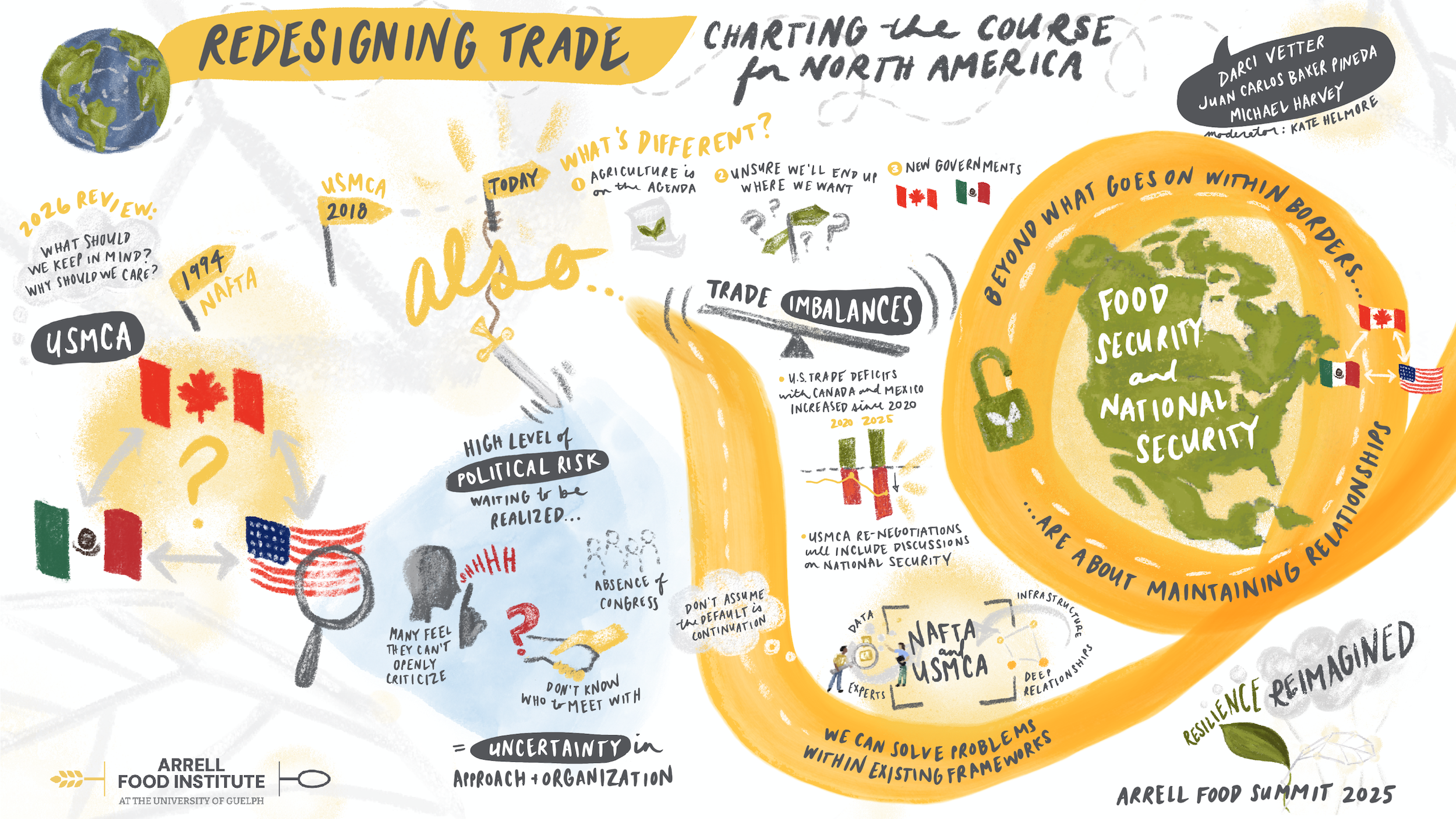
Redesigning Trade: Charting the Course for North America
As North America prepares for the 2026 review of the USMCA amid ongoing trade tensions, this panel explored the forces reshaping regional trade and agricultural markets. Speakers highlighted the importance of engaging in current consultation processes to ensure Canadian agriculture has a strong voice in upcoming negotiations. The discussion underscored both the sector’s deep reliance on U.S. export partnerships and its potential influence in advancing a more reciprocal and resilient North American trading relationship. This visual summary captures key insights on trade policy, economic opportunity, and the role of agriculture in the region’s future.
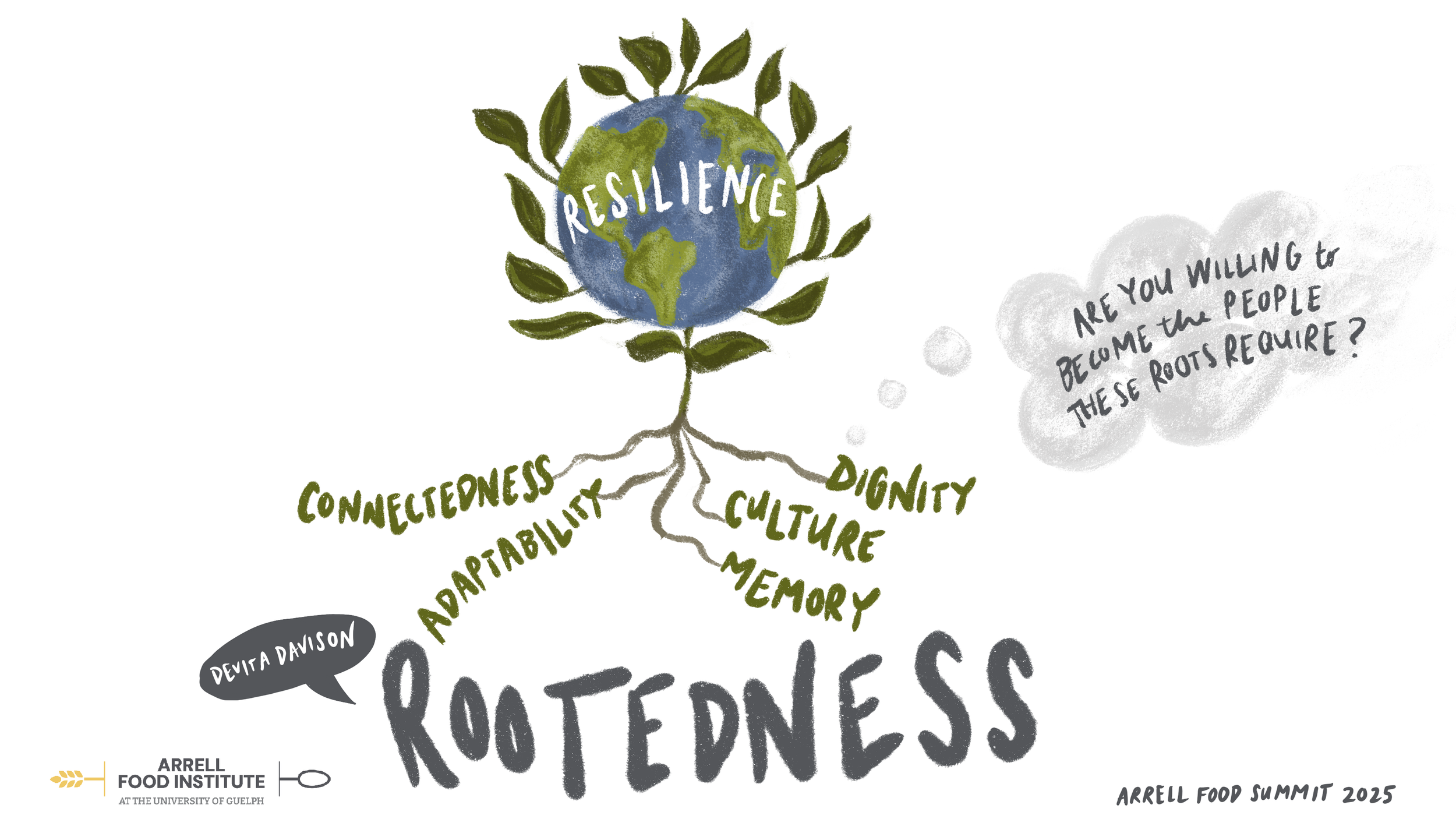
Rooted Resilience: Securing a Global Food Future from the Ground Up
In this inspiring keynote, food justice advocate Devita Davison challenged conventional approaches to addressing food insecurity, arguing that resilience is about more than survival—it is about preserving dignity, connection, and humanity. She highlighted how food systems designed for scale often prioritize corporate interests over community needs, creating vulnerability rather than resilience. This visual summary captures key insights on the power of community-rooted food systems to strengthen local economies, build capacity, foster belonging, and create a more equitable and adaptable food future.
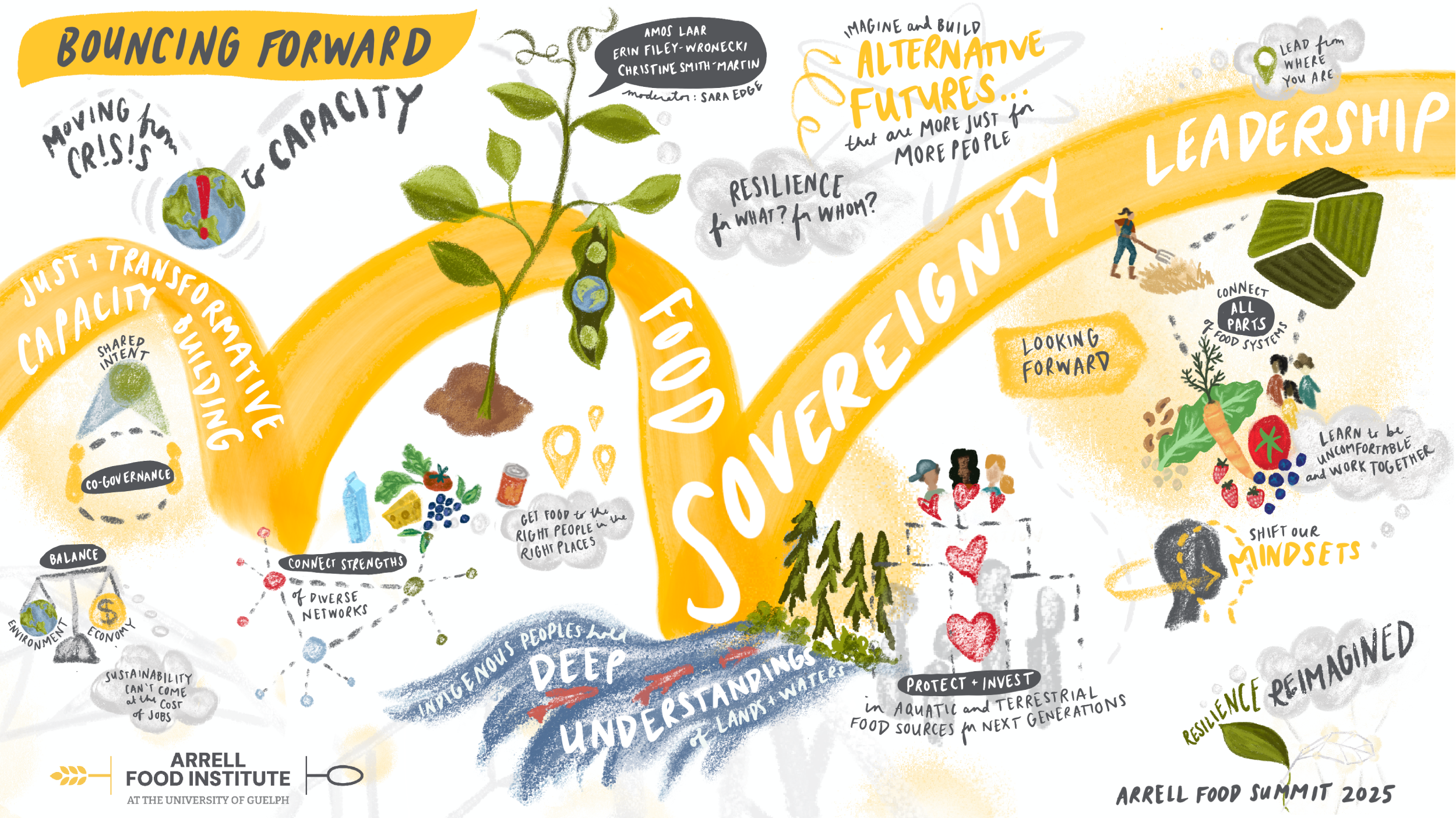
Bouncing Forward: Moving from Crisis to Capacity
As climate change, pandemics, and supply chain disruptions continue to challenge food systems worldwide, this session explored why resilience must go beyond recovery and focus on transformation. Panelists shared strategies for building capacity before crises occur, emphasizing foresight, prevention, and long-term systems change. This visual summary captures key insights on collaborative leadership, Indigenous-led solutions, food security initiatives, and the importance of working across sectors to create more sustainable, equitable, and resilient food systems that can thrive in the face of future challenges.
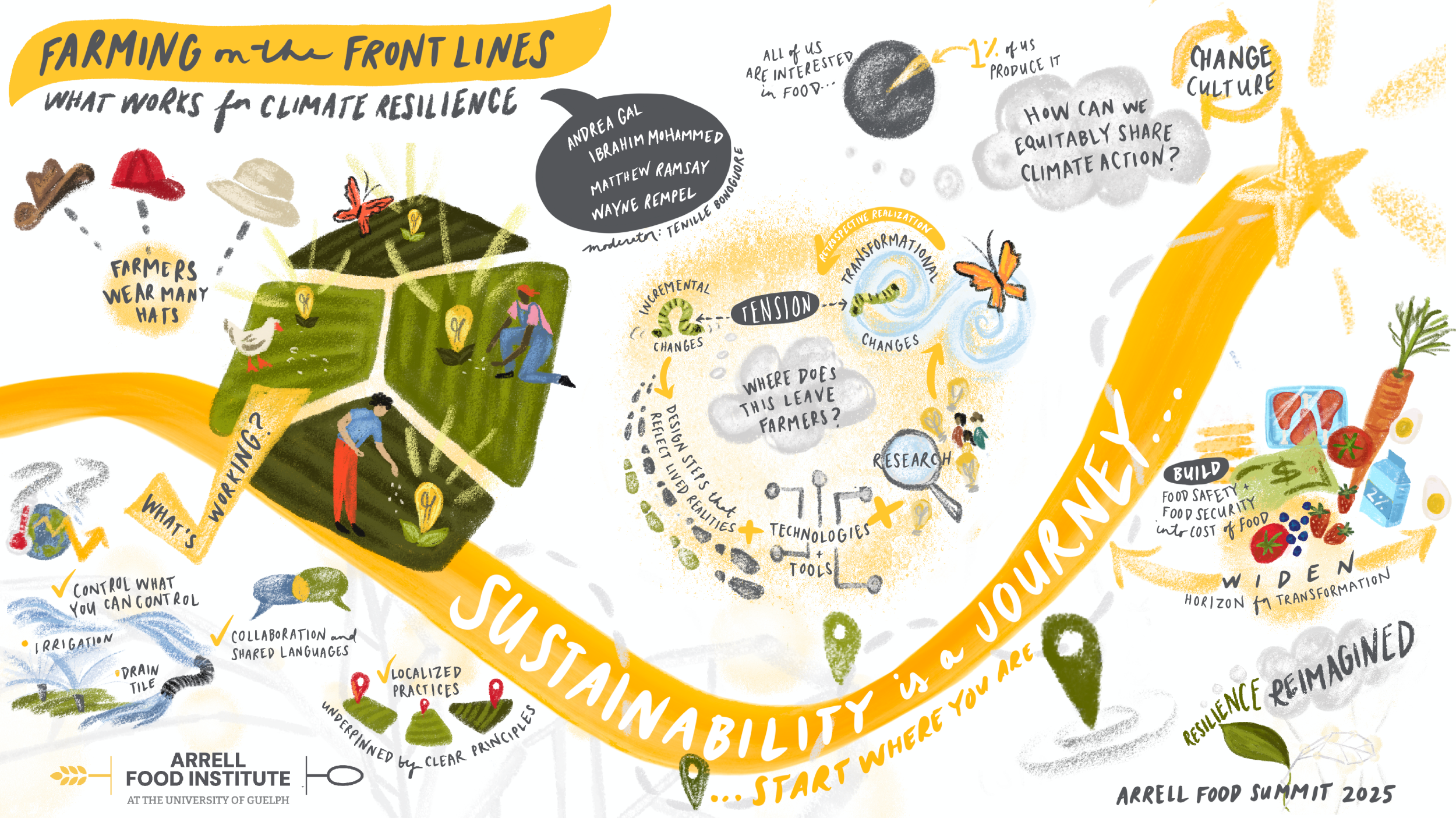
Farming on the Front Lines: What Works for Climate Resilience
As climate change brings increasing uncertainty to agriculture, this panel showcased the practical innovations and real-world experiences helping farmers adapt and thrive. Producers shared lessons from implementing strategies such as cover cropping, winter wheat rotations, improved drainage, and data-driven decision-making, highlighting the importance of pairing local knowledge with emerging technologies. This visual summary captures key insights on climate adaptation, peer learning, and the investments needed to support farmer-led innovation, strengthen resilience, and build more sustainable agricultural systems for the future.